

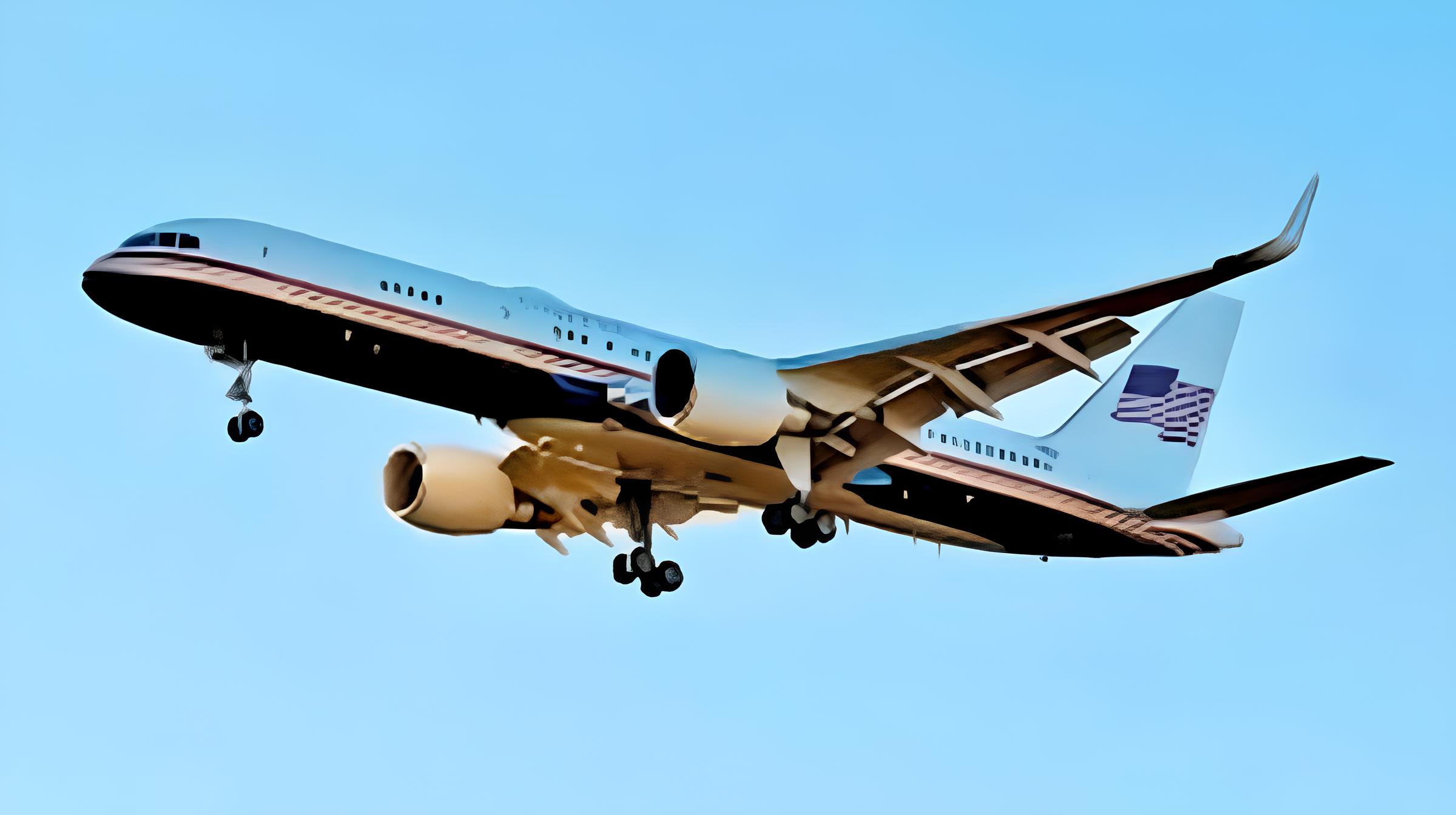
GREENVILLE, A United States Air Force C-32A has surfaced with a radical new exterior design.
The aircraft, tail number 99-0003, was photographed at Majors Airport in Greenville on February 17, 2026.
This modified Boeing 757 usually serves as Air Force Two when the Vice President is on board.
“The Air Force is implementing a new paint scheme requirement for the executive airlift fleet,” a spokesperson confirmed Tuesday.
The new livery features a dark navy underside, a white upper fuselage, and a deep red stripe.
A gold cheatline separates the red and navy sections, running the entire length of the aircraft.
This design mirrors the color palette personally ordered by President Donald Trump for the future Air Force One fleet.
President Trump originally proposed this “patriotic” aesthetic in 2019 during his first term in office.
The tail of the aircraft displays a stylized American flag, depicted as if waving in the wind.
Aviation tracking data places the jet at the L3Harris facility in Texas since December 8, 2025.
This facility specializes in complex avionics upgrades and heavy maintenance for the United States military’s special mission aircraft.
The refurbishment coincides with scheduled maintenance cycles to minimize additional costs to the taxpayer.
The End of an Era
The new look marks a decisive departure from the traditional light blue and white design used for decades.
That iconic scheme was established by First Lady Jacqueline Kennedy and industrial designer Raymond Loewy in 1962.
For over 60 years, the “robin’s egg” blue has symbolized American presidential power globally.
Critics of the new design argue it closely resembles the livery of President Trump’s personal Boeing 757.
Supporters describe the navy, red, and gold combination as a stronger projection of American strength and heritage.
“It is going to be red, white and blue, which I think is appropriate,” Trump stated regarding the design. The change signals the administration’s intent to rebrand the entire executive fleet, not just the presidential 747s.
Technical Specifications and Thermal Concerns
Aviation experts previously raised concerns about the thermal implications of painting the aircraft’s underside a dark navy.
Darker colors absorb more heat, potentially affecting sensitive electronic systems onboard the sophisticated flying command centers.
A 2023 Air Force study suggested that dark paint could contribute to overheating in specific ground environments.
However, the application of this livery on the C-32A suggests engineers have mitigated these thermal risks.
Modern composite materials and advanced cooling systems may have resolved the temperature issues cited in earlier reports.
The C-32A is equipped with Pratt & Whitney PW2000 engines and advanced communications gear for global reach.
The Fleet-Wide Rollout
This C-32A is the first wide-body military VIP jet to publicly display the controversial new aesthetic.
A Department of Homeland Security Boeing 737 was spotted with a similar paint job in November 2025. The Air Force confirmed the scheme will apply to the incoming VC-25B Air Force One aircraft.
Boeing is currently assembling two VC-25B jets, which are heavily modified 747-8 Intercontinental airframes.
The first of these new presidential 747s is expected to enter service closer to 2027 or 2028.
Until then, the C-32A fleet will serve as the primary ambassadors of the new administration’s visual brand.
Operational Context
The C-32A fleet consists of four primary aircraft operated by the 89th Airlift Wing at Andrews Air Force Base. These jets transport the Vice President, First Lady, and Cabinet secretaries to destinations worldwide.
Tail 99-0003 utilized the callsign “Vader 20” during its post-maintenance test flights over Texas this week. This specific aircraft has a long service history, having transported multiple Vice Presidents over the last two decades.
Its transformation indicates a retroactive application of the new branding to existing airframes, not just new acquisitions.
Political and Budgetary Background
The debate over the Air Force One livery has persisted since the middle of the Trump administration’s first term.
President Biden cancelled the red, white, and dark blue project in 2023 citing cost and technical delays.
Following his inauguration in 2025, President Trump immediately reinstated the directive to alter the fleet’s appearance.
Defence officials stated the repaint occurred during “regularly scheduled maintenance,” avoiding specific price tag disclosures. The total cost for the VC-25B program was projected at $3.9 billion in 2018 but has since risen.
Visual Identity and Branding
The new design utilizes a gold stripe that is thicker than the silver cheatline on the Kennedy livery.
This gold accent matches the branding found on Trump Organization properties and the President’s private aviation assets.
The “UNITED STATES OF AMERICA” text on the fuselage utilizes a bolder, more modern serif typeface.
Visual comparisons show the flag on the tail is significantly larger than the flag on the previous livery.
Design analysts note the shift from “soft power” pastels to “hard power” high-contrast primary colors.
The Role of Air Force Two
While often overshadowed by the larger VC-25, the C-32A is the workhorse of executive diplomatic travel.
The jet can operate from shorter runways than the 747, allowing access to more remote global locations. Vice Presidents rely on the C-32A for domestic campaign stops and urgent international diplomatic missions.
The aircraft contains a stateroom, conference area, and communications center comparable to the Oval Office.
Its new exterior ensures the Vice President projects the same visual authority as the President upon arrival.
Public and Military Reaction
Aviation enthusiasts tracked the plane’s departure from Greenville with intense interest on Tuesday.
Photos of the aircraft circulated rapidly on social media platforms like X, formerly known as Twitter.
Military insiders suggest the uniformity across the fleet simplifies supply chains for paint and exterior maintenance. Standardizing the livery across Air Force, Coast Guard, and DHS assets creates a cohesive government brand.
However, traditionalists lament the loss of the Loewy design, considered a masterpiece of mid-century modern art. The Loewy scheme was famously praised for its timeless elegance and ability to conceal the aircraft’s age.
The appearance of 99-0003 confirms the administration’s commitment to a rapid visual overhaul of federal assets.
Observers expect the remaining three C-32A aircraft to undergo similar repainting during their next depot stops.
This rollout strategy suggests the entire VIP fleet could sport the new colors before the 2028 operational deadline.
The status of the “Doomsday” E-4B planes regarding this paint scheme remains unconfirmed by the Pentagon. Those command-and-control aircraft require specific coatings to resist nuclear thermal flash and electromagnetic pulses.
The dark navy belly and gold cheatline are now the official face of American executive aviation.
 Priyanshu Gautam
  Aastha Choudhary