

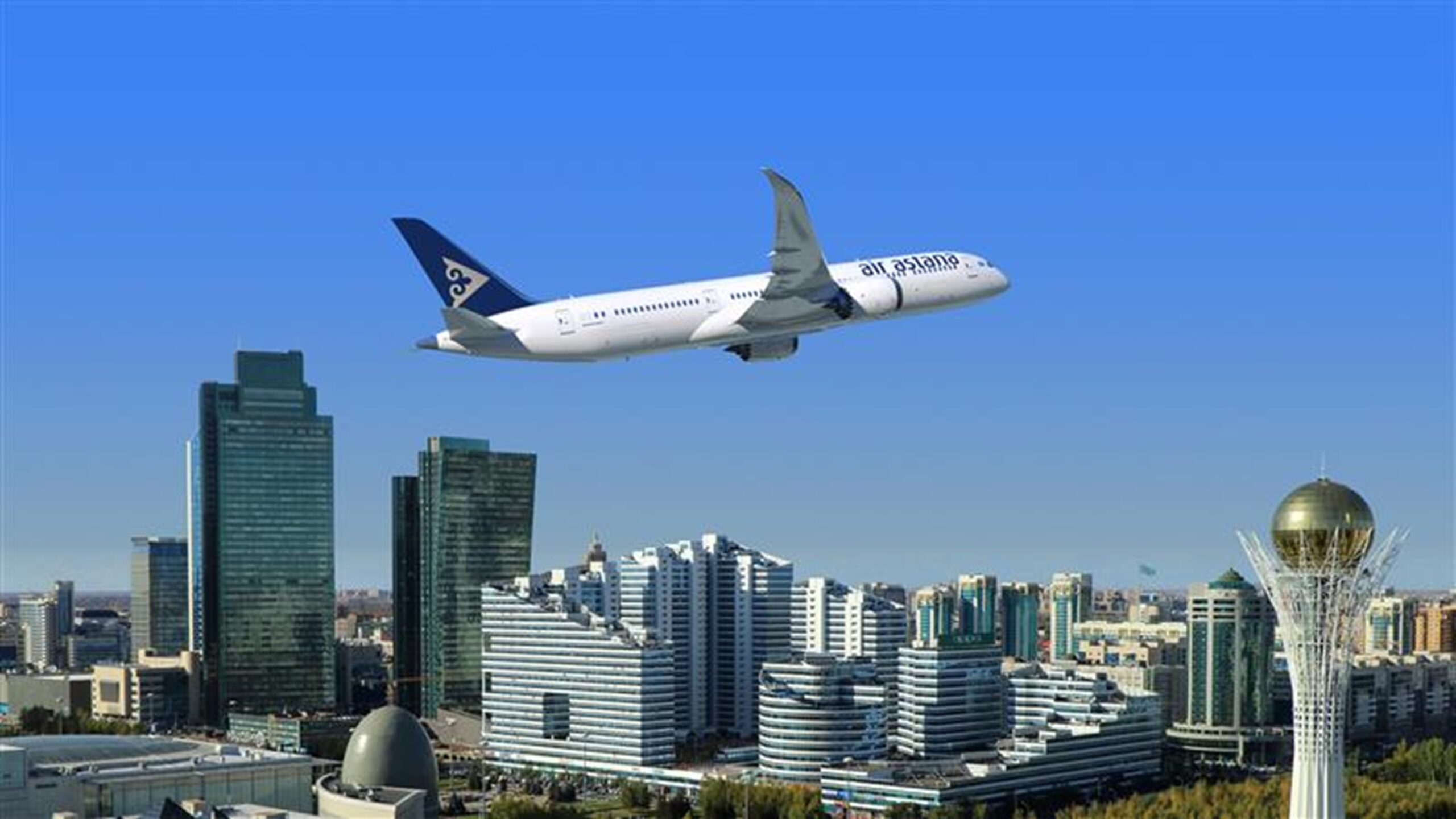
SEATTLE, Air Astana executives inked a definitive purchase agreement Tuesday in Seattle for up to 15 Boeing 787-9 Dreamliners, cementing a strategic pivot for the Kazakh flag carrier. The deal converts a tentative November commitment into hard backlog for the American planemaker.
It signals Air Astana’s intent to exploit the geopolitical vacuum in Russian airspace by routing long-haul traffic through Almaty. This acquisition represents the carrier’s largest single fleet investment. It positions the airline to challenge established Gulf hubs for the lucrative Asia-Europe transit market while retiring its aging Boeing 767-300ER fleet.
For the manufacturer, this finalization arrives at a crucial juncture. Boeing Commercial Airplanes has spent the last two years fighting to stabilize production rates at its South Carolina facility.
The 787-program faced agonizing delivery pauses in the early 2020s due to fuselage join verification issues. Securing a finalized order from a growing Central Asian player validates the erratic recovery of the Charleston production line. It forces Airbus to fight harder for widebody market share in a region previously treated as a secondary market.
The contract structure reveals a calculated approach to risk. Air Astana will source three additional 787-9s through lease agreements, bringing the total widebody introduction to 18 hulls. Mixing direct purchases with lessor inventory provides the airline with fleet flexibility.
It creates a financial buffer against the demand volatility inherent in operating out of the Commonwealth of Independent States. The first deliveries will trigger a complex operational transition for the carrier’s flight operations and maintenance teams. They must graduate from the mechanical flight controls of the 767 to the fly-by-wire architecture of the Dreamliner.
Peter Foster, Air Astana’s veteran CEO, has long played a conservative hand. His strategy avoided the rapid, debt-fueled expansion that grounded other state-backed carriers. This order marks a departure from that caution.
It suggests the airline sees a permanent shift in global flight corridors. Restrictions on Russian airspace have forced European and Asian carriers to fly southern routes. Almaty sits directly on this new silk road. The 787-9, with its 7,635 nautical mile range, allows the carrier to bypass traditional hubs. They can now link Kazakhstan directly to major US cities or deep into Southeast Asia without payload penalties.
Boeing’s sales team will celebrate the win, but the victory highlights a disjointed product strategy. The 787 remains the only viable widebody option for carriers seeking medium-capacity long-haul lift from Boeing. The Dreamliner victory offers a distraction from a larger, looming awkwardness in Everett. Boeing maintains the massive 777X will finally achieve type certification later in 2026.
Yet the order book reveals a stark irony. Not a single U.S. passenger airline has signed for the jet. Foreign flag carriers prop up the program. Domestic executives remain unconvinced by the delayed giant, preferring the flexibility of the smaller 787 or the Airbus A350.
The absence of U.S. orders for the 777X casts a shadow over the Air Astana announcement. It suggests that while Boeing can still move units in developing markets, its home-team customers are voting with their wallets against its flagship product.
United and American Airlines have opted to build their future long-haul networks around the 787 architecture. This reality pressures Boeing to squeeze every ounce of efficiency out of the Dreamliner program. They cannot afford production glitches on the 787 when the 777X effectively has no domestic market.
Air Astana’s choice of the 787-9 also impacts the engine wars. While the press release omitted engine selection details, the high-altitude, variable-temperature operations in Almaty demand robust powerplant performance.
General Electric’s GEnx-1B and Rolls-Royce’s Trent 1000 compete fiercely in this sector. The Kazakh carrier’s decision will hinge on time-on-wing guarantees. Operations in Central Asia expose engines to dust and extreme cold. Maintenance reliability often trumps fuel burn efficiency in such environments.
The deal’s financing likely involves Export-Import Bank support or similar credit guarantees. Boeing acts as a top U.S. exporter, and deals of this magnitude rarely close without sovereign-level credit backing. This political layer adds complexity.
Kazakhstan navigates a delicate diplomatic path between its neighbors Russia and China, and the West. A multi-billion dollar commitment to U.S. aerospace binds the nation closer to Western economic interests. It serves as a tangible asset in diplomatic negotiations.
Critics might argue the order volume is aggressive for a niche carrier. Eighteen widebodies represent a massive capacity injection for a market the size of Kazakhstan. Success relies on the “sixth freedom” traffic model.
Air Astana must convince passengers traveling from London to Bangkok or Frankfurt to Seoul to change planes in Almaty. Competing with Qatar Airways or Turkish Airlines on product quality and price is a brutal undertaking. Those competitors operate fleets ten times the size and enjoy massive state subsidies or favorable fuel economics.
The cabin configuration will dictate the carrier’s yield potential. To compete with the Gulf carriers, Air Astana must install a business class product that rivals the Qsuite or Delta One. Doing so adds weight and reduces seat count. It forces a trade-off between luxury and unit cost. If they opt for a dense configuration to serve migrant labor traffic, they lose the high-yield business traveler. Finding the middle ground on a fleet of 18 aircraft is a mathematical gamble.
Supply chain fragility remains the silent partner in this deal. Tier 1 suppliers like Spirit AeroSystems have struggled to meet the cadence required by Boeing’s ramp-up targets. A finalized order is only paper until the metal sits on the ramp. Air Astana’s timeline for fleet modernization depends entirely on the health of subtier manufacturers in Kansas, Japan, and Italy. Any disruption in the supply of titanium forgings or composite resin could slide delivery dates. In the current industrial climate, a 2026 delivery slot often slips to 2027 without warning.
This acquisition effectively kills any lingering hope Airbus held for placing the A330neo in the Air Astana fleet. The European consortium had pitched the A330-900 as a low-risk replacement for the 767s. By locking in the Dreamliner, Air Astana commits to a Boeing long-haul ecosystem for the next twenty years. It simplifies pilot training and spare parts logistics. It also leaves the airline vulnerable to any future Boeing quality escapes or Airworthiness Directives that might ground the specific type.
The market watches now to see how quickly the lessor-owned aircraft arrive. These three jets will serve as the pathfinders. Their operational reliability will set the tone for the arrival of the 15 direct-order airframes. If the entry-into-service goes smoothly, Air Astana gains a first-mover advantage in the reshuffled Eurasian transit market. If technical snags plague the initial jets, the carrier risks bleeding cash on expensive assets that cannot fly revenue sectors.
Air Astana has placed a heavy bet on geography and American engineering. The focus shifts to Charleston’s assembly floor and the carrier’s commercial department. Boeing must deliver a defect-free product on schedule to validate the carrier’s trust. Simultaneously, Air Astana must fill those seats in a volatile geopolitical region. The hardware is merely the admission ticket to a high-stakes global transit game where margins are thin and mistakes are fatal.
 Vibhuuti Goyal