

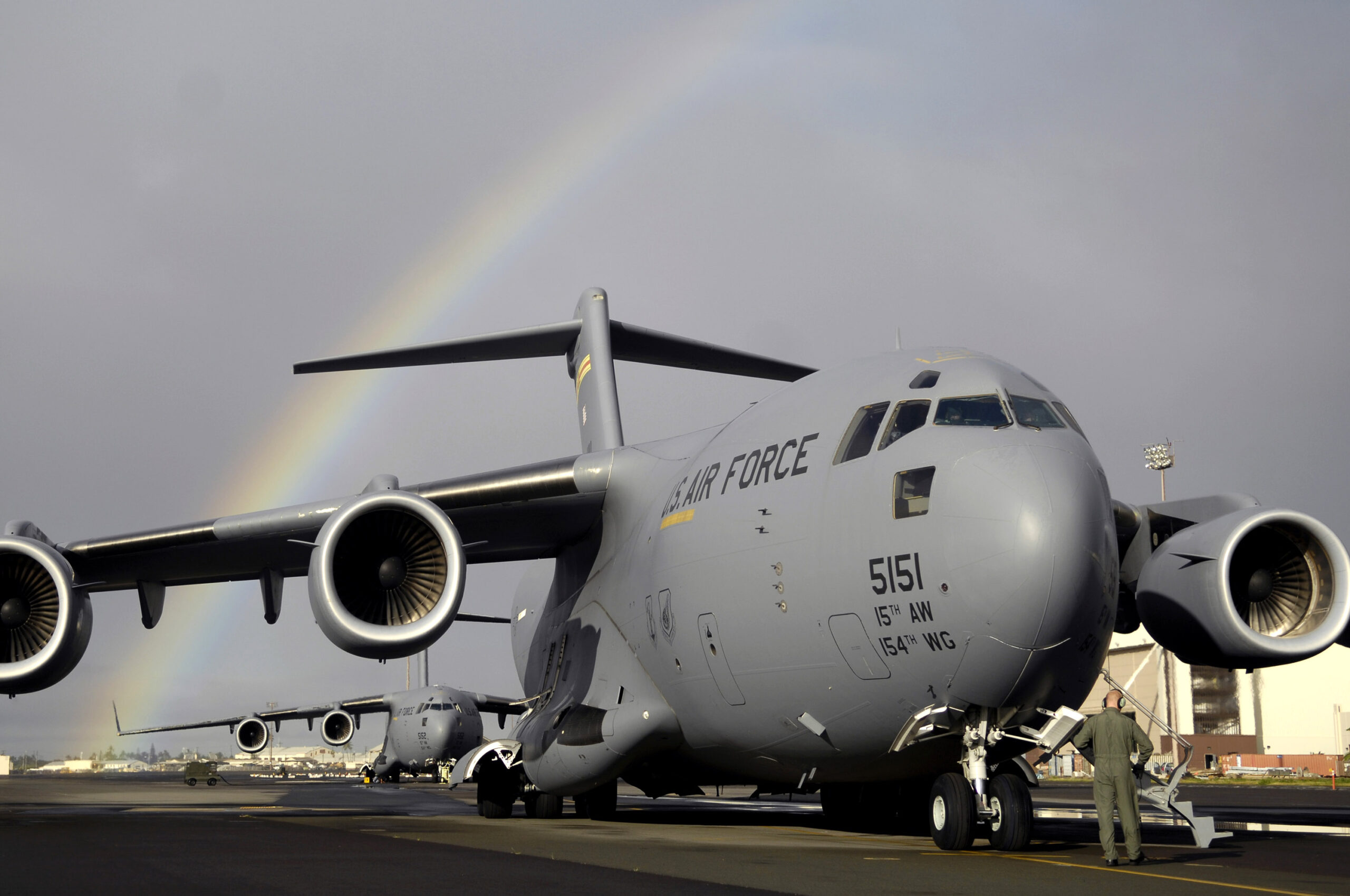
The United States(US) Air Force has just handed Boeing a $400 million lifeline to perform a brain transplant on the C-17 Globemaster III, a strategic airlifter that rolled off the assembly line in Long Beach before the first iPhone was released.
This contract, awarded in early February 2026, tasks the manufacturer with ripping out 1990s-era avionics and installing a Modular Open Systems Architecture (MOSA) cockpit to keep the fleet mission-ready through 2075. But beneath the press release applause lies a grittier reality: this award is less about innovation and more about survival, bridging a critical gap in American airlift capacity while Boeing fights to certify its commercial future.
The deal secures the C-17’s relevance, but it also highlights a deep reliance on sustaining legacy metal as the company’s next-generation commercial order book remains starkly empty of domestic buyers.
Boeing’s defense division is effectively being paid to keep the lights on for a production line that went dark in 2015. This specific $400 million allocation is technically a flight deck modernization effort, but it dovetails with the broader $2.3 billion sustainment contract that expires in October 2027. The Air Force is buying time. With the Next-Generation Airlifter (NGAL) program still a paper tiger not expected until the late 2030s, the Pentagon has no choice but to double down on the C-17.
For Boeing, this is steady, high-margin sustainment work—the kind of “bread and butter” revenue that keeps technicians employed in San Antonio and Robins Air Force Base while the commercial side in Everett struggles to stop the bleeding.
The irony of this situation is sharp enough to cut glass. While the Pentagon is throwing hundreds of millions at Boeing to keep a thirty-year-old design flying, not a single United States passenger airline has signed an order for the company’s newest flagship, the 777X. As of February 2026, the 777X program is inching toward a certification target later this year, six years behind schedule.
Yet, the order book tells a damning story. Emirates, Qatar Airways, and Lufthansa have signed on, but United, American, and Delta have voted with their wallets, opting instead for the Airbus A350 or sticking with the smaller 787 Dreamliner. The “home team” has effectively benched Boeing’s biggest player, leaving the manufacturer in the awkward position of being the Pentagon’s indispensable mechanic while remaining a commercial pariah in its own backyard.
Technically, the C-17 upgrade is a masterclass in obsolescence management. The shift to MOSA allows the Air Force to swap out software and hardware modules like Lego bricks, breaking the “vendor lock” that typically makes defense upgrades exorbitantly expensive.
It is a smart move for a fleet that is being flown harder than ever, from the evacuation of Kabul to the relentless logistics train into Eastern Europe. But for Boeing, it is also a reminder that their most reliable income stream comes from fixing what they built decades ago rather than selling what they are building today. The defense giant has become a sustainment depot, generating cash flow from the past to fund the certification struggles of the present.
The 2027 timeline mentioned in the dispatch is critical not just for the C-17, but for the corporate balance sheet. That year marks the expiration of the current C-17 sustainment block and the slip-date for the 777X’s entry into service. If the commercial division misses that certification window again, the revenue gap will widen. Boeing needs the defence side to perform flawlessly to subsidize the commercial recovery.
The $400 million cockpit upgrade ensures the C-17 remains the backbone of Global Reach, but it also serves as a financial hedge. Every dollar spent updating C-17 HUDs and mission computers is a dollar that stabilizes the company while it navigates the FAA’s microscope on the 777X.
From a strategic standpoint, the Air Force’s commitment to the C-17 through 2075-yes, fifty more years—is an indictment of the current state of aerospace development. It suggests a lack of confidence in the industry’s ability to field a replacement quickly or affordably.
The C-17 is the B-52 of cargo: too valuable to retire, too expensive to replace. Boeing is the beneficiary of this stagnation. They hold the technical data, the supply chain relationships, and the engineering expertise required to keep these beasts airworthy. It is a captive market.
However, the “insider” view suggests this contract is also a warning. The Air Force is demanding open architecture specifically to reduce future dependence on Boeing. By mandating MOSA, the Pentagon is preparing a future where third-party integrators can bid on software updates, chipping away at Boeing’s monopoly on C-17 modernization.
They are paying Boeing to install the very system that might one day cut Boeing out of the loop. It is a necessary trade-off for the manufacturer: take the cash now to survive the current liquidity crunch, even if it means weakening the long-term grip on the platform.
The juxtaposition of the C-17 and 777X timelines paints a picture of a company pulling in two different directions. In Long Beach and San Antonio, Boeing is the trusted guardian of American air power, keeping the logistics arteries open with proven, rugged tech.
In Everett, it is a company fighting for credibility, trying to convince the FAA and domestic carriers that its new composite-wing giant is safe, reliable, and necessary. The fact that Delta and United are refreshing their widebody fleets with Airbus jets while the Air Force clings to the C-17 speaks volumes about where the trust currently resides.
As we move deeper into 2026, the industry will be watching whether Boeing can leverage this defence stability to fix its commercial execution. The C-17 contract is a win, certainly, but it is a win born of necessity, not invention. It buys time, but it doesn’t buy the future. Unless the 777X finds a US buyer or the defence division can secure a win on a new clean-sheet design like the NGAL, Boeing risks becoming a heritage maintenance organization with a small commercial appendage.
Boeing must prove it can be a builder again, not just a mechanic for the Air Force’s flying museums.
 Vibhuuti Goyal
[…] and Kratos Defense & Security Solutions have secured a $12.4 million contract from the US Air Force to execute the preliminary design of the GEK1500 engine. This agreement marks a critical pivot in […]