

SEATTLE/BOEING, The engine roar returning to King County Airfield offers the first tangible proof that the industrial heart of American aviation is beating again, though the rhythm remains dangerously irregular. Boeing finally broke its delivery paralysis in January 2026, handing over 46 airframes to customers starved for capacity. This surge represents the highest monthly output since the catastrophic labor disputes and regulatory lockdowns of late 2024, signaling that the manufacturer has begun to clear the tarmac of gliders that sat unfinished for months. CEO Kelly Ortberg’s strategy of triage appears to be moving metal, yet the numbers mask a precarious reality on the factory floor where speed once again threatens to outpace stability.
Investors reacted with predicted enthusiasm. The stock ticked upward on the news, hungry for any sign that the cash-flow hemorrhage has been cauterized. Deliveries trigger final payments from airlines, and Boeing needs every cent to service a debt load that ballooned during its two-year production purgatory. However, seasoned observers in Renton and Everett see this January performance less as a victory lap and more as a high-stakes stress test. The system is pushing airframes out the door, but the supply chain feeding that system remains brittle, undercapitalized, and deeply skeptical of Boeing’s forecasting.
The sheer volume of January deliveries relies heavily on inventory burn-down rather than fresh production. Dozens of 737 MAX 8 and MAX 10 jets have languished in storage lots from Moses Lake to Victorville, awaiting reworked components or FAA sign-offs. Clearing this backlog inflates the headline numbers. It creates a temporary illusion of health. The true test comes later this spring when the “shadow factory”—the army of mechanics fixing traveled work out on the flight line, must give way to a clean, linear production flow inside the assembly halls. That transition has failed three times in the last five years.
Renton, home of the 737 program, feels different this time. The frenetic energy of the pre-crisis years is gone, replaced by a tense, deliberate pacing enforced by FAA auditors who maintain a physical presence on the floor. Federal regulators have not fully lifted the production caps imposed after the Alaska Airlines door-plug blowout two years ago, forcing Boeing to prioritize quality milestones over rate increases. This regulatory leash is the only reason the supply chain hasn’t snapped already. Tier 1 suppliers, specifically the recently reintegrated Spirit AeroSystems, are struggling to hire skilled labor to meet even these suppressed targets. The fuselages arriving by rail from Wichita still require too many hours of rectification before wings can be mated.
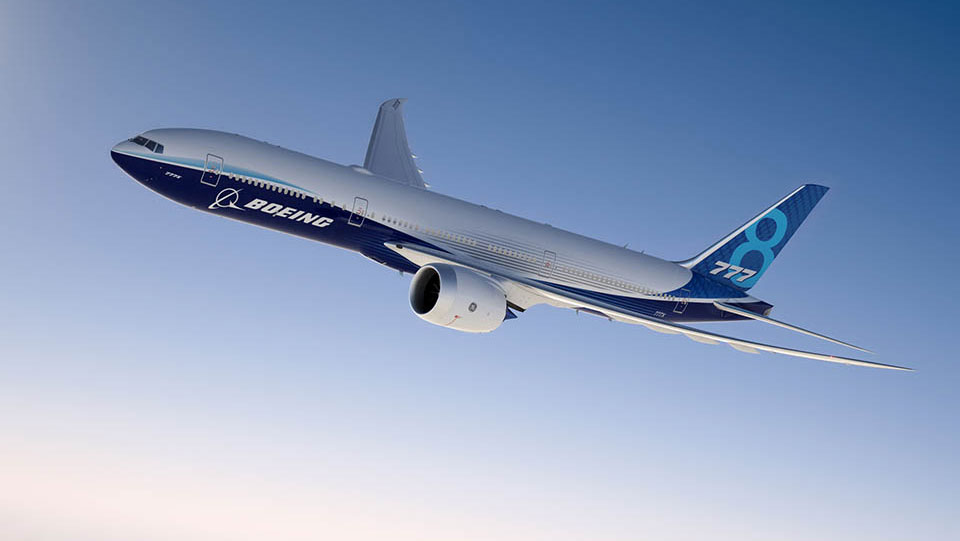
While the narrowbody lines fight to regain cadence, the company’s widebody strategy faces an existential paradox that no amount of January delivery data can obscure. The 777X, Boeing’s folding-wing behometh designed to rule long-haul international routes, is finally nearing the finish line. Certification flights are aggressively targeting a mid-2026 approval. The engineering is impressive. The fuel burn numbers are solid.
Yet, a glaring commercial silence hangs over the program.
Despite the 777X sitting on the cusp of FAA Type Certification, not a single US passenger airline has signed a firm order for the jet. This stands as a humiliating indictment of Boeing’s product planning. The flagship of America’s aerospace giant will fly solely for foreign flags, Emirates, Qatar Airways, Lufthansa, Singapore Airlines—while domestic heavyweights like United, American, and Delta turn their backs. US carriers have cast their lot with the Airbus A350 or life-extended 777-300ERs, wary of the delays that pushed the 777X entry-to-service five years past its original deadline.
This domestic rejection creates a strategic vulnerability. Boeing relies on US carriers to anchor its programs, providing a stable backlog that isn’t subject to geopolitical winds or currency fluctuations. Without a US launch customer, the 777X becomes a niche product for Gulf connectors, leaving Boeing without a direct competitor to the A350-1000 in its own backyard. The irony is sharp. Boeing spent billions developing a jet that its neighbours in Chicago, Fort Worth, and Atlanta refuse to buy.
Across the Atlantic, Airbus views Boeing’s January rebound with guarded interest rather than fear. The European consortium faces its own supply chain hell, specifically with engine manufacturers unable to meet time-on-wing promises. But Airbus holds the advantage of trust. Airline CEOs vented their fury at Boeing throughout 2024 and 2025; they are now merely exhausted. They will take the planes because they have no choice. Capacity constraints globally are so severe that carriers are leasing twenty-year-old jets to fill summer schedules. Boeing is capitalizing on this desperation. They are not winning business; they are fulfilling obligations to customers who are contractually trapped.
The financials behind the January delivery block reveal the urgency of the moment. Boeing burned through cash at an alarming rate during the IAM strike and subsequent restart efforts. The pre-delivery payments (PDPs) drying up in late 2025 forced the board to secure expensive financing. Delivering 48 jets releases roughly $2.5 billion in final liquidity. That money is already spoken for. It will pay down revolving credit lines and fund the massive certification costs for the 737 MAX 7 and MAX 10, both of which remain stuck in regulatory amber.
Labor relations remain the quiet variable in this equation. The IAM District 751 contract signed after the bruising strike secured significant wage hikes, but it did not heal the cultural rift between the shop floor and the C-suite. Mechanics are emboldened. They are utilizing safety reporting channels more aggressively, stopping the line for minor deviations that previously might have been swept into “travel work.” This cultural shift improves safety, undoubtedly. It also destroys the predictability of production schedules. Management can no longer mandate speed; they must negotiate for it, shift by shift.
The defense side of the house offers no sanctuary. The fixed-price contracts on the KC-46 tanker and the T-7A Red Hawk continue to act as an anchor on earnings. Boeing used to rely on defense profits to smooth out commercial cycles. Now, the commercial division must perform perfectly to subsidize the losses in defense. January’s delivery surge suggests the commercial engine is sputtering to life, but it needs to run at full RPM to drag the rest of the company out of the red.
Suppliers down the chain are watching the monthly rates with scepticism born of trauma. Many small machine shops in the Pacific Northwest and Southern California went bankrupt during the oscillation of the last three years. Those that survived are demanding better payment terms and refusing to invest in capacity expansion until they see six months of stability. Boeing cannot ramp up without them. The supply chain is not a faucet to be turned on; it is a heavy flywheel that requires immense energy to spin up. January was a hard push on that wheel. It is not yet momentum.
The Charleston facility, responsible for the 787 Dreamliner, contributed twelve frames to the January total. This program has largely escaped the reputational carnage of the 737 MAX, but it suffers from seat supplier shortages and heat exchanger issues. The Dreamliner remains Boeing’s most reliable cash generator, yet production rates are capped by how fast suppliers can ship premium business class seats. You cannot deliver a $200 million glider. The finished goods inventory in Charleston is slowly draining, but the rate of intake is barely matching the rate of outflow.
Customer acceptance walks are taking longer than ever. Airlines are sending armies of inspectors to Renton and Charleston. They are checking rivet flushness, panel gaps, and wiring bundles with forensic intensity. A delivery in 2026 is not the rubber-stamp ceremony it was in 2018. It is a hostile negotiation. Boeing is getting the planes handed over, but the cost of rework before the customer signs the acceptance paperwork is eroding margins. The 46 deliveries in January likely carried a higher cost of goods sold (COGS) than any batch in the company’s history.
Management’s rhetoric has shifted from “shareholder value” to “engineering excellence,” a necessary pivot to appease the FAA and the flying public. However, the pressure from Wall Street has not evaporated; it has merely gone underground. Analysts are updating their models, projecting a return to free cash flow positive status by Q3 2026. These models assume a linear progression from January’s numbers. They assume no new quality escapes, no new supplier bankruptcies, and a smooth certification for the 777X and MAX 10. In the aviation business, assuming a year without surprises is a fool’s wager.
The resurgence of the 737 MAX is the only path to solvency. The world fleet is aging. Fuel prices remain volatile, making the efficiency of the MAX indispensable. Southwest Airlines, Ryanair, and United are screaming for the metal. This demand floor puts a safety net under Boeing, preventing total collapse. As long as the duopoly exists, Boeing will survive. The question is not about survival, but about relevance. If they cannot stabilize production in 2026, they risk losing the next decade of fleet renewal to Airbus, ceding market share that will take a generation to recover.
Looking at the order book, the silence from China remains deafening. Geopolitics continues to freeze Boeing out of what will soon be the world’s largest aviation market. COMAC is slowly eating away at the low end of that market, while Airbus scoops up the premium orders. Boeing’s comeback is entirely dependent on Western markets and the Middle East. The January deliveries went primarily to North American and European lessors and carriers. The geographic narrowing of Boeing’s customer base is a long-term strategic threat that a good month of deliveries cannot fix.
The executive leadership knows that February and March must match or exceed January’s performance. A dip back into the twenties would signal that January was merely a clearing of the throat, not the start of a song. They need to demonstrate rate stability to the FAA to get the production caps lifted. Until those caps are gone, Boeing is fighting with one hand tied behind its back, unable to leverage the economies of scale that define its business model.
Inside the corporate offices in Arlington, the mood is likely one of restrained relief. They bought themselves time. But out on the damp concrete of the Renton tarmac, the reality is grittier. Mechanics are tired. The tools are worn. The scrutiny is relentless. Every plane that leaves the ground is a victory against entropy. The company has proven it can still build airplanes. It has not yet proven it can build them consistently, profitably, and without the chaos that has defined the last five years.
Boeing has stepped back from the ledge. It has not yet walked away from the cliff.
 Vibhuuti Goyal
[…] Integration: Hawaiian Airlines (Expected 2026, following Alaska Airlines […]