

SYNOPSIS
Washington and New Delhi have ended a brutal six-month trade standoff with a massive interim agreement cantered on aerospace and defense. The pact slashes punitive American tariffs on Indian exports from 50% to 18% in exchange for New Delhi eliminating duties on U.S. civil aviation components. India has committed to purchasing $500 billion in American goods over five years, with an estimated $80 billion earmarked specifically for Boeing aircraft. This deal cements India’s role as the primary “China Plus One” alternative for the U.S. aerospace supply chain.
WASHINGTON, The trade war is over. President Donald Trump and Prime Minister Narendra Modi finalized an interim trade framework this week that fundamentally restructures the U.S.-India aviation corridor. The deal, announced after tense negotiations concluded late Tuesday, immediately unlocks zero-duty access for American aircraft manufacturers to the booming Indian market.
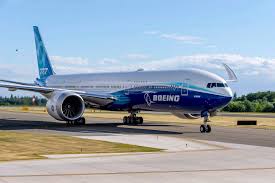
In a decisive move, the White House agreed to cut the crushing 50% tariffs imposed on Indian goods last August down to 18%. In return, India will strip import duties from U.S. aerospace parts and raw materials. Commerce Minister Piyush Goyal confirmed the administration expects Indian carriers to place orders for Boeing passenger jets valued at nearly $80 billion.
The agreement targets the supply chain bottleneck. By removing tariffs on “dual-use” aerospace alloys and precision components, Washington aims to integrate Indian manufacturers directly into the assembly lines of Boeing and GE Aerospace.
“This is not just a sales purchase,” a senior U.S. Trade Representative official said on background. “This is a full integration of the Indian industrial base into the American aerospace ecosystem.”
Major Indian carriers Air India and Akasa Air, already holding large order books, are expected to expand their fleet acquisition plans within the quarter. The deal effectively designates India as a preferential manufacturing partner; a status previously reserved for NATO allies and select Asian partners like Japan.
The economics of this deal rely on hard engineering metrics rather than diplomatic goodwill. For Boeing, the math is simple: cost reduction. The 50% tariff regime initiated in 2025 had strangled the supply of critical sub-assemblies from Indian vendors like Tata Advanced Systems.
This reversal allows Boeing to accelerate production rates for the 737 MAX and 787 Dreamliner. The zero-tariff entry for Indian components, specifically wiring harnesses, floor beams, and vertical fin structures, will likely reduce airframe production costs by an estimated 4-6%.
The MRO Pivot
The most significant long-term shift is the formalization of India as a global Maintenance, Repair, and Overhaul (MRO) hub. Boeing will operationalize a $100 million heavy maintenance facility in Nagpur, Maharashtra.
This site will handle “C-checks” and “D-checks”, the most intensive aircraft maintenance procedures, for U.S. carriers operating in the Indo-Pacific. Previously, these fleets flew to Singapore or China for heavy maintenance. Shifting this volume to Nagpur offers U.S. airlines labor cost arbitrage of nearly 40%.
Defense Integration
On the military front, the deal activates the production phase of the GE F414 jet engine pact. HAL (Hindustan Aeronautics Limited) will now receive 80% of the critical technology transfer value, including the single-crystal blade coating technology previously denied to non-treaty partners. This engine will power India’s Mk2 Light Combat Aircraft, decoupling the Indian Air Force from Russian propulsion systems.
Strategic risks remain high. The $500 billion import target set by New Delhi is ambitious. Achieving it requires India to absorb American energy exports and defense hardware at an unprecedented rate. Failure to meet annual purchase benchmarks could trigger “snap-back” provisions, restoring the 50% tariff wall.
For the aviation sector, the trajectory is clear. U.S. aerospace firms will aggressively decouple from Chinese suppliers in favor of Indian alternatives. Expect announcements from major Tier-1 suppliers like Spirit AeroSystems regarding new joint ventures in Bengaluru and Hyderabad by Q3 2026.
 Vibhuuti Goyal
  Priyanshu Gautam