

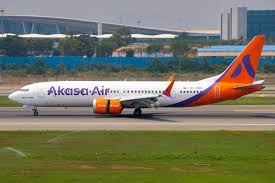
MUMBAI, Akasa Air, the aggressive budget carrier backed by the Jhunjhunwala estate, faces a significant leadership rupture today. Chief Commercial Officer and co-founder Praveen Iyer has resigned, signalling the second major C-suite departure since the airline’s 2022 launch. The carrier immediately named Chief Information Officer Anand Srinivasan as the new commercial head, signalling a pivot toward data-driven revenue operations.
Praveen Iyer tendered his resignation earlier this week. He leaves the three-year-old airline immediately. Iyer served as a critical architect of Akasa’s network strategy since its inception. His departure dismantles a key pillar of the original “founding team” assembled by CEO Vinay Dube. The airline confirmed the exit in an internal memo this morning. Management moved swiftly to fill the vacuum. Anand Srinivasan, previously the Chief Information Officer, now assumes control of the commercial portfolio. This reshuffle consolidates two critical functions, technology and commerce, under a single executive. The transition occurs as Akasa approaches its fourth year of operations, a notoriously difficult phase for Indian low-cost carriers scaling up against entrenched incumbents like IndiGo.
Iyer’s exit exposes deepening fissures within the airline’s upper echelons. Sources indicate the “second high-level exit” references growing tension over the carrier’s aggressive expansion targets versus operational stability. Iyer, a veteran of Jet Airways, favoured traditional network density. His strategy clashed with the board’s push for rapid, algorithm-led route optimization.
The appointment of Srinivasan marks a deliberate structural shift. Placing a CIO at the helm of commercial operations is unorthodox in traditional aviation. It suggests Akasa plans to automate pricing models and distribution channels more aggressively than its rivals. The airline aims to reduce customer acquisition costs through direct digital integration, bypassing traditional travel distribution systems. This move mirrors strategies seen in ultra-low-cost Western carriers but remains untested in the high-touch Indian market. The loss of a domain specialist like Iyer, however, risks alienating trade partners who rely on relationship-based bookings.
Akasa Air now enters a volatile maturation phase. Srinivasan must prove that code can replace commercial intuition. Immediate challenges include stabilizing the network amid global supply chain delays affecting Boeing 737 MAX deliveries. If the new commercial structure succeeds, Akasa could set a new industry benchmark for tech-led operational efficiency. Failure, however, risks stalling revenue growth just as the airline attempts to break even. Investors will watch closely to see if this leadership consolidation streamlines decision-making or overburdens a single executive channel. The outcome will define Akasa’s trajectory through 2026.
 Vibhuuti Goyal
  Priyanshu Gautam