

SYNOPSIS
Boeing Co. (NYSE: BA) has defied Wall Street pessimists, posting a full-year net income of $2.24 billion for fiscal 2025, ending a six-year streak of financial hemorrhage. The surprise profitability, driven by a fourth-quarter delivery surge and the stabilization of 737 MAX production, marks the first tangible victory for CEO Kelly Ortberg’s “factory-first” turnaround strategy. While the aerospace giant has technically returned to the black, deep structural challenges remain, including a ballooning long-term debt load and persistent delays in the 777X widebody program.
CHICAGO, Feb. 10, 2026, The drought is over. Boeing reported fiscal 2025 net income of $2.24 billion today, shattering analyst expectations of a narrow loss and marking its first profitable year since the 737 MAX crisis began in 2018. The turnaround was anchored by a blistering fourth quarter, where the company delivered 160 commercial jets, pushing full-year revenue to $98.4 billion, a 28% increase year-over-year.
CEO Kelly Ortberg, speaking from the Renton, Washington assembly line rather than the Arlington headquarters, credited the results to “operational discipline, not financial engineering.” The company delivered 540 aircraft in 2025, including 410 737 MAX narrowbodies, hitting the lower end of its revised targets but sufficient to generate positive cash flow in the second half.
Wall Street reacted swiftly. Boeing shares surged 8.4% in pre-market trading, erasing lingering doubts about liquidity. The results validate the painful restructuring enacted after the 2024 machinist strike, which included a 10% workforce reduction and the reintegration of Spirit AeroSystems, a deal formally closed in December 2025.
THE ORTBERG DOCTRINE
The return to profitability is less about market demand, which remains insatiable, and more about a fundamental shift in Boeing’s industrial culture. Ortberg’s decision to dismantle the remote executive structure and embed leadership within the factories has begun to yield data-driven results. Rework rates at the Renton facility dropped 40% in Q4 2025 compared to the previous year. The “travelled work” practice, where unfinished planes move down the line, has been effectively banned for the 737 program.
PRODUCTION PULSE
The 737 MAX program is the engine of this financial recovery. Production rates stabilized at 38 jets per month in November 2025, a critical threshold for cash generation. The Federal Aviation Administration (FAA) has maintained strict oversight but signalled satisfaction with recent quality audits. The successful absorption of Spirit AeroSystems remains a logistical tightrope. Boeing now directly controls the fuselage supply chain, but it also inherited Spirit’s debt and operational inefficiencies. Integrating the Wichita manufacturing base into Boeing’s quality management system (QMS) is the primary operational objective for Q1 2026.
THE WIDEBODY HEADWIND
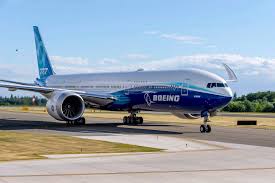
Despite the narrowbody success, the twin-aisle segment remains a financial drag. The 777X program, already six years late, incurred another $900 million charge in Q3 2025 due to certification delays. Entry-into-service (EIS) is now officially pushed to early 2027. This delay forces Boeing to pay penalties to launch customers like Emirates and Lufthansa, eroding margins. Meanwhile, the 787 Dreamliner program has stabilized at seven builds per month, providing a steady, high-margin cash stream that offset losses in the Defence, Space & Security (BDS) division.
DEFENSE DRAG
The defence unit continues to bleed cash on fixed-price development contracts. The KC-46A tanker and T-7A Red Hawk programs recorded combined charges of $1.1 billion in 2025. Inflation and supply chain fracturing have made pre-pandemic bids untenable. However, high-volume production of legacy platforms like the F-15EX and increasing munitions demand from geopolitical instability helped the division post a modest revenue gain, masking the underlying profitability crisis in development programs.
THE OUTLOOK
Boeing enters 2026 with a record backlog valued at $567 billion, but the balance sheet remains fragile. Debt stands at $48 billion, down from its peak but still triple 2018 levels. Management has prioritized debt repayment over shareholder returns; dividends remain suspended.
The strategic focus for 2026 is threefold: ramping 737 MAX production to 47 per month by year-end, securing FAA certification for the 737-10, and executing the industrial integration of Spirit AeroSystems without disrupting output.
“We have stopped the bleeding,” Ortberg wrote in a memo to employees this morning. “Now we must rebuild the muscle.” The $2.24 billion profit is a milestone, but for an aerospace duopoly player, sustained stability is the only metric that matters. The market has signalled approval, but the factory floor will determine if this recovery is durable.
 Vibhuuti Goyal