

SYNOPSIS
Boeing is centralizing its 787 Dreamliner engineering operations by transferring significant technical and design work to its campus in North Charleston, South Carolina. This consolidation aligns the aircraft’s engineering oversight with its primary final assembly and delivery hub to improve production efficiency. The transition focuses on streamlining the communication between design engineers and the manufacturing floor to resolve structural and systems integration issues in real time.
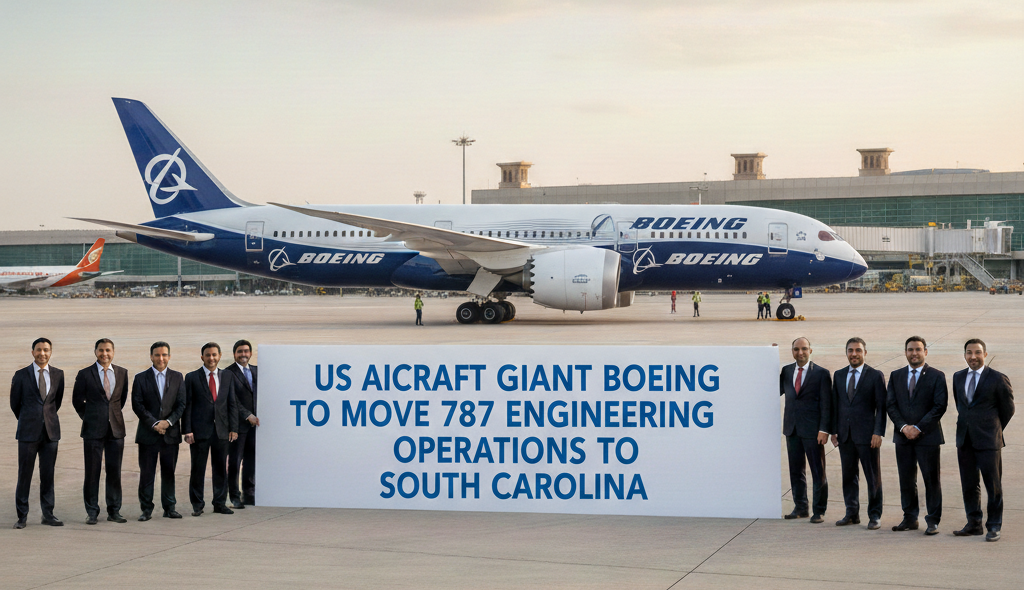
Boeing confirmed it will relocate a substantial portion of its 787 Dreamliner engineering workforce and technical design functions to South Carolina. This strategic move establishes North Charleston as the primary center for both the production and the sustaining engineering of the 787-8, 787-9, and 787-10 variants. The company is currently shifting design support, production engineering, and structural analysis roles from its traditional Pacific Northwest facilities to the South Carolina site. This decision follows the 2021 consolidation of all 787 final assembly operations to the same location, which ended production of the wide-body jet in Everett, Washington. The transfer of engineering work aims to eliminate the 2,800-mile geographical gap between design teams and the assembly line, allowing for more rapid iteration on engineering changes. Company officials state that the move is designed to enhance the long-term stability of the 787 program by creating a single, integrated ecosystem for the carbon-fiber aircraft. The relocation involves hundreds of engineering positions and includes the establishment of dedicated flight test support and fleet reliability units within the South Carolina facility.
The consolidation of engineering work at North Charleston focuses on the unique requirements of the 787 Dreamliner airframe, which consists of approximately 50 percent composite materials by weight. Engineering teams at the South Carolina site are now responsible for the structural integrity and design certification of the one-piece fuselage barrels. These components, specifically sections 44, 46, 47, and 48, are fabricated on-site using advanced automated fiber placement machines. By moving engineering work to the location where these barrels are wound and cured in large-scale autoclaves, Boeing intends to reduce the time required to address manufacturing deviations. The engineering scope includes the management of the 787-10 variant, which is the largest member of the family at 224 feet in length and is produced exclusively in South Carolina due to its mid-body fuselage sections being too large for efficient transport via the Dreamlifter cargo fleet. Technical teams in South Carolina will now oversee the integration of the GEnx-1B and Trent 1000 engine systems, ensuring that propulsion specifications meet the aerodynamic requirements of the specific airframe configurations.
LOGISTICAL AND PRODUCTION EFFICIENCIES
Relocating engineering personnel to the production site addresses long-standing logistical challenges associated with the 787 supply chain. The North Charleston facility operates as a high-throughput environment where the integration of the mid-body and aft-fuselage sections occurs before final join. By having design engineers physically present at the point of assembly, Boeing can implement engineering change orders with greater precision. This change is expected to decrease the “travelled work” metrics, where components move down the line with unfinished tasks. Data from previous production cycles indicated that the separation of engineering and assembly led to delays in resolving non-conformance reports. The new structure allows for immediate collaboration between the shop floor technicians and the engineering staff, which is critical for the complex electrical systems and the bleed-less engine architecture of the 787. The site also houses the 787 Interior Responsibility Center, where engineering teams design and certify cabin configurations, including seating layouts and overhead bin assemblies, for global airline customers.
TECHNICAL SPECIFICATIONS AND PROGRAM METRICS
The 787 program utilizes a high-voltage electrical system that replaces traditional pneumatic systems found on older aircraft. Engineering teams in South Carolina are tasked with monitoring the performance of the 1.45-megawatt power generation system. This involves overseeing the four 250-kVA starter-generators and the lithium-ion battery assemblies that provide auxiliary power. The shift of engineering work to Carolina also encompasses the maintenance of the digital twin models used for the 787 fleet. These models allow engineers to simulate stress loads and fatigue on the composite wings and fuselage over the aircraft’s projected 30-year lifespan. The South Carolina engineering hub will also manage the technical data for the 787-9, which features a maximum takeoff weight of 560,000 pounds and a range of 7,565 nautical miles. Precision in engineering support is required to maintain the laminar flow properties of the 787’s aerodynamic surfaces, which contribute to the aircraft’s 20 percent reduction in fuel consumption compared to the aircraft it replaced.
WORKFORCE AND LABOR RESTRUCTURING
The transition of engineering roles to South Carolina represents a significant shift in the aerospace labor market. Boeing is offering relocation packages to experienced engineers from its Washington sites while simultaneously recruiting from regional technical universities to build a local talent pipeline. The engineering workforce in North Charleston must adhere to strict Federal Aviation Administration (FAA) guidelines regarding Organization Designation Authorization. This allows Boeing engineers to act on behalf of the regulator to certify specific design elements. The company is investing in new laboratory facilities and collaborative workspaces in South Carolina to accommodate the influx of technical staff. This labor restructuring is part of a broader effort to reduce overhead costs by utilizing the lower cost of operations in the Southeastern United States. The move also impacts the Boeing Design Center and other global engineering sites that must now coordinate their activities through the North Charleston hub rather than the Seattle-based headquarters of the Commercial Airplanes division.
The centralization of engineering in South Carolina facilitates closer monitoring of the global supply chain, which provides major sub-assemblies such as the wings from Japan and the horizontal stabilizers from Italy. The North Charleston engineering team serves as the primary point of contact for these international partners, ensuring that all incoming components meet the exacting tolerances required for composite joining. Regulatory oversight remains a primary focus, as the FAA has increased its presence at the South Carolina facility following previous production quality concerns. The engineering teams are responsible for implementing the enhanced quality management systems mandated by federal regulators. This includes the rigorous documentation of every shim used in the fuselage joins and the verification of surface flatness at the millimetric level. By housing the engineering authority within the same complex as the final assembly line, Boeing aims to demonstrate a more transparent and accountable manufacturing process to aviation authorities and customers. The transition of these roles is expected to be completed in phases, with full operational capacity of the engineering hub projected for the next fiscal cycle.
 Vibhuuti Goyal
[…] 787-program faced agonizing delivery pauses in the early 2020s due to fuselage join verification […]