

SYNOPSIS
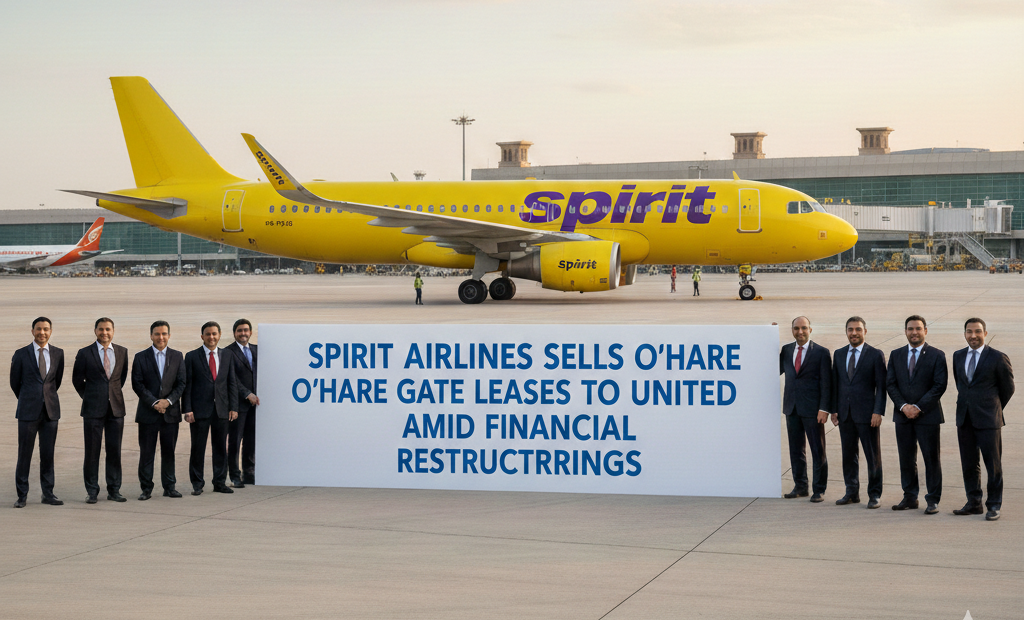
United Airlines has secured the acquisition of gate leasehold interests from Spirit Airlines at Chicago O’Hare International Airport to expand its domestic and international hub operations. The transaction involves the transfer of multiple gate positions and associated terminal infrastructure as Spirit Airlines undergoes significant financial restructuring and fleet reductions. This move provides United Airlines with critical capacity in Terminal 3 to alleviate congestion and support its United Next growth strategy. The deal follows Spirit Airlines’ decision to liquidate assets and exit specific high-cost markets to manage its debt obligations and operational challenges.
United Airlines acquired six gate positions from Spirit Airlines at Chicago O’Hare International Airport on Wednesday. The agreement facilitates the immediate transfer of lease agreements for gates G1, G3, G5, G7, G9, and G11 located within Terminal 3. United Airlines will assume all operational control and maintenance responsibilities for these assets, which include the passenger boarding bridges, ground power units, and pre-conditioned air systems. This acquisition occurs as Spirit Airlines reduces its flight frequencies at the Chicago hub to mitigate mounting financial losses and ongoing Pratt and Whitney GTF engine grounding issues. The transition is scheduled for completion within the next thirty days to ensure seamless integration into the United Airlines spring flight schedule.
The acquired gates in Terminal 3 are classified as Group III and Group IV aircraft positions, capable of accommodating narrow-body aircraft such as the Boeing 737 MAX 9 and the Airbus A321neo. Each gate is equipped with JBT AeroTech Jetway systems and dual-plug ground power units providing 90kVA of electricity to parked aircraft. The hydrant fueling systems at these positions are integrated into the main O’Hare fuel farm infrastructure, which maintains a flow rate of 1,000 gallons per minute. United Airlines plans to retrofit these gates with its proprietary departure management systems and biometric boarding scanners to match the technological standard of its existing concourses. The logistics of the transfer also include the acquisition of Spirit’s ramp office space and baggage handling belts assigned to these specific gate locations. This additional square footage allows United Airlines to optimize its ground service equipment staging areas, which currently face congestion during peak bank periods.
SPIRIT AIRLINES FINANCIAL RESTRUCTURING AND LIQUIDITY
Spirit Airlines entered this divestment as part of a broader liquidity preservation strategy. The carrier faces $1.1 billion in debt maturities due in 2025 and has reported consistent quarterly losses following the termination of its proposed merger with JetBlue Airways. By selling or transferring gate leases at high-demand airports like O’Hare, Spirit aims to lower its fixed operational costs and exit slots that do not meet its revised unit revenue targets. The airline has grounded approximately 40 aircraft due to the accelerated inspection requirements for the Geared Turbofan engines, which has reduced its overall capacity and necessitated a smaller terminal footprint. The proceeds from the gate transfer and the elimination of associated lease payments will contribute to Spirit’s attempt to shore up its balance sheet. This contraction represents a shift from Spirit’s previous aggressive expansion policy as it now prioritizes cash flow over market share in competitive hub environments.
UNITED AIRLINES HUB OPTIMIZATION AND THE UNITED NEXT PROGRAM
The acquisition of these gates is a component of the United Next initiative, which aims to increase the average gauge of aircraft in the domestic network. United Airlines is currently taking delivery of more than 100 aircraft per year, requiring additional terminal space to maintain high utilization rates. The new gate capacity at O’Hare allows United to move certain regional jet operations to the G Concourse, freeing up larger gates in Concourses B and C for wide-body aircraft like the Boeing 787-10. This logistics shift is expected to improve the Hub Departure Pressure (HDP) metrics by reducing the time aircraft spend waiting for an open gate during peak arrival windows. Internal data suggests that the additional six gates will allow for an incremental 30 to 36 daily departures, representing a significant increase in available seat miles (ASM) from the Chicago hub. The airline is also evaluating the installation of upgraded de-icing fluid recovery systems at the new gate locations to improve winter operational efficiency.
REGULATORY OVERSIGHT AND AIRPORT AUTHORITY COORDINATION
The Chicago Department of Aviation (CDA) has reviewed the transfer of these leasehold interests to ensure compliance with the O’Hare Modernization Program and existing airport use agreements. The Federal Aviation Administration (FAA) monitors such transfers to ensure that competition is maintained and that no single carrier exerts an anti-competitive level of control over airport infrastructure. Because United Airlines and American Airlines already maintain a dual-hub status at O’Hare, the reallocation of Spirit’s gates is being scrutinized for its impact on low-cost carrier access to the Chicago market. However, the CDA confirmed that Spirit will retain a minimal presence in Terminal 5, where it will consolidate its remaining operations. This consolidation aligns with the long-term O’Hare Global Terminal project, which seeks to reorganize domestic and international traffic to improve passenger transit times and baggage processing reliability.
LOGISTICS OF THE TRANSITION PERIOD
The physical handover of the gates will occur in phases to prevent disruption to current flight schedules. Spirit Airlines ground crews will vacate the Terminal 3 ramp offices by the end of the current fiscal quarter, while United Airlines Technical Operations teams will begin the installation of United-specific communications hardware. This includes the implementation of the Aerobahn surface management system and the integration of the gates into the United Global Operations Center (GOC) network. Ground service equipment (GSE), including pushback tugs and belt loaders previously branded for Spirit, will be removed or repainted to comply with United’s corporate identity standards. United Airlines has also initiated the hiring of additional ramp agents and gate agents to staff the expanded footprint, targeting a headcount increase of 150 personnel at the Chicago hub to support the increased operational volume.
Industry analysts project that the gate acquisition will allow United Airlines to capture a larger percentage of the high-yield corporate travel market departing from Chicago. By increasing the frequency of flights to key business destinations such as New York, London, and San Francisco, United can offer a more competitive schedule than other carriers. The Cost Per Available Seat Mile (CASM) for these new gates is expected to be lower than United’s system average due to the high density of operations at the O’Hare hub. Conversely, Spirit’s departure from these gates highlights the increasing difficulty for ultra-low-cost carriers to maintain operations at primary hubs with high landing fees and labor costs. The market shares previously held by Spirit at O’Hare is expected to be absorbed by United and American Airlines, potentially leading to a stabilization of fares on routes where Spirit previously offered deep discounts.
FUTURE TERMINAL DEVELOPMENT AND CAPACITY CONSTRAINTS
As O’Hare International Airport continues its $8.5 billion expansion and modernization effort, the availability of gate space remains a primary constraint for all operating airlines. The transfer from Spirit to United highlights the premium placed on Terminal 3 assets, which offer proximity to existing maintenance hangars and catering facilities. United Airlines has indicated that it will continue to seek opportunities to acquire additional gate space as smaller carriers adjust their networks in response to changing economic conditions. The long-term plan for Terminal 3 includes a total renovation of the concourse areas and the integration of new security screening technologies, which United intends to influence through its increased leasehold presence. The airline’s commitment to O’Hare is solidified by this expansion, ensuring that it maintains the infrastructure necessary to support its growing fleet of large narrow-body aircraft through the end of the decade.
 Vibhuuti Goyal
  Anshum Raj