

There’s an old saying in military aviation: lose the eyes, and the rest go blind. On March 27, 2026, Iran may have done exactly that. In a carefully coordinated strike on Prince Sultan Air Base in Saudi Arabia, Iranian forces destroyed one of the U.S. Air Force’s most prized and irreplaceable assets: an E-3 Sentry AWACS aircraft. It wasn’t just a plane that burned on that taxiway. It was a piece of America’s airborne nervous system, and its loss is sending shockwaves through defense circles that are only beginning to be understood.
What Even Is an E-3 Sentry?
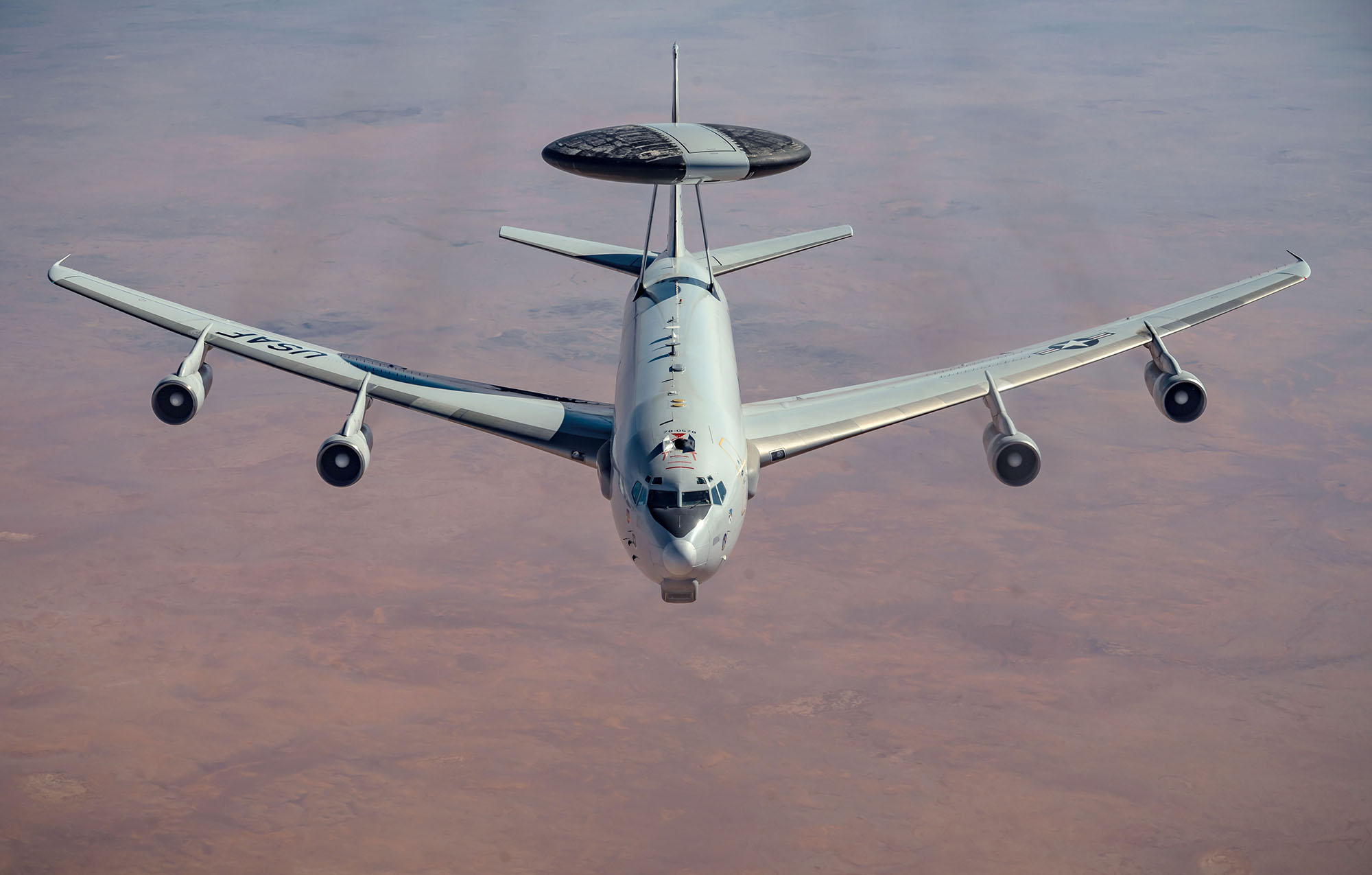
To grasp why this matters, you need to understand what the E-3 Sentry actually does. Built on a modified Boeing 707 airframe and identifiable by its distinctive rotating radar dome sitting atop the fuselage, the aircraft is essentially a flying command post and surveillance platform rolled into one. It doesn’t drop bombs or fire missiles. What it does is far more valuable in a complex air war it watches everything.
The E-3’s onboard radar system can track around 600 targets simultaneously: aircraft, missiles, large drones, even armored vehicles on the ground from distances exceeding 370 kilometers. That information flows in real time to fighter pilots, naval commanders, Pentagon officials, and ground forces. Military analysts describe it as the chessmaster of the battlefield, while the fighter jets are merely the pieces. Without it, coordination breaks down. Coverage gaps open. Threats that would otherwise have been detected early slip through.
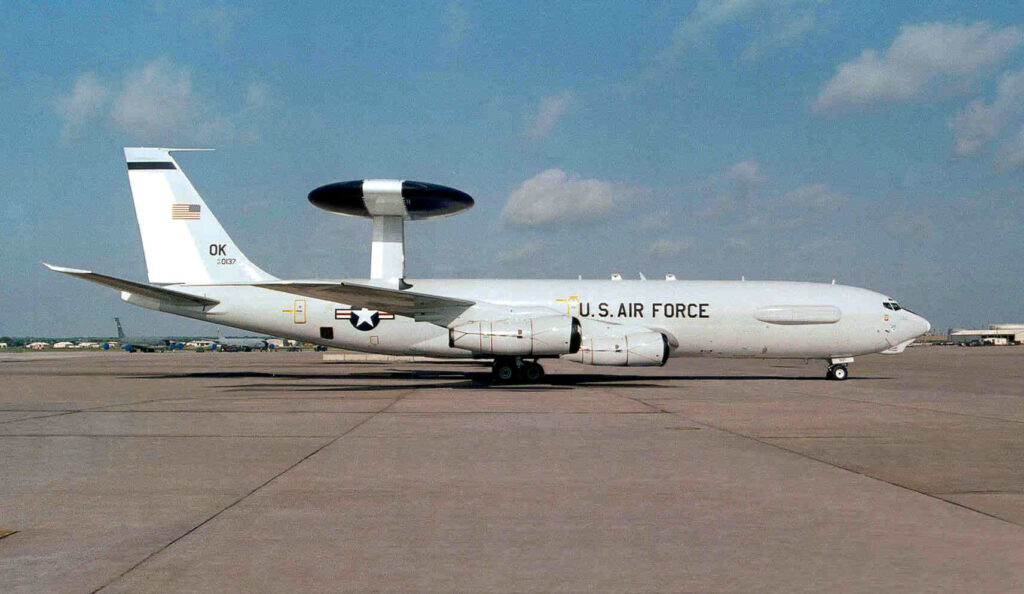
The U.S. Air Force has been flying these aircraft since the late 1970s and has leaned on them in virtually every major conflict since: Desert Storm, Kosovo, Iraq, Afghanistan. They’re not glamorous, and they rarely make headlines. Until now.
The Strike That Changed Things
On the evening of March 27, Iranian forces launched a wave of ballistic missiles and one-way attack drones at Prince Sultan Air Base: a major American military hub located outside Riyadh, Saudi Arabia. The base has been under recurring pressure since the current conflict between the United States, Israel, and Iran began on February 28. But this particular strike landed differently.
Ground-level photographs that emerged over the following 48 hours told the story without any need for official confirmation. E-3 serial number 81-0005, part of the 552nd Air Control Wing out of Tinker Air Force Base, Oklahoma, had its rear fuselage completely burned out. Debris was scattered across the taxiway. The iconic radar dome — housing the AN/APY-2 surveillance system that makes the whole aircraft what it is – was on the ground, separated from the wreck. This wasn’t damaged. This was destruction.
Iran subsequently released its own satellite imagery, provided by Chinese firm MizarVision, showing before-and-after views of the aircraft’s position on the taxiway. Ukrainian President Volodymyr Zelensky confirmed separately that Russian satellites had imaged the base on at least three occasions in the days leading up to the strike on March 20, 23, and 25 suggesting the attack was carefully planned with real-time intelligence support.
A Fleet Already Running on Empty
What makes this loss particularly painful is the context of the aircraft’s scarcity. The U.S. Air Force started this year with only 17 E-3 Sentries in its entire fleet, fewer than the number of B-2 stealth bombers. Six of those had been forward-deployed to the Middle East for this conflict. Now one is gone, and it almost certainly cannot be repaired.
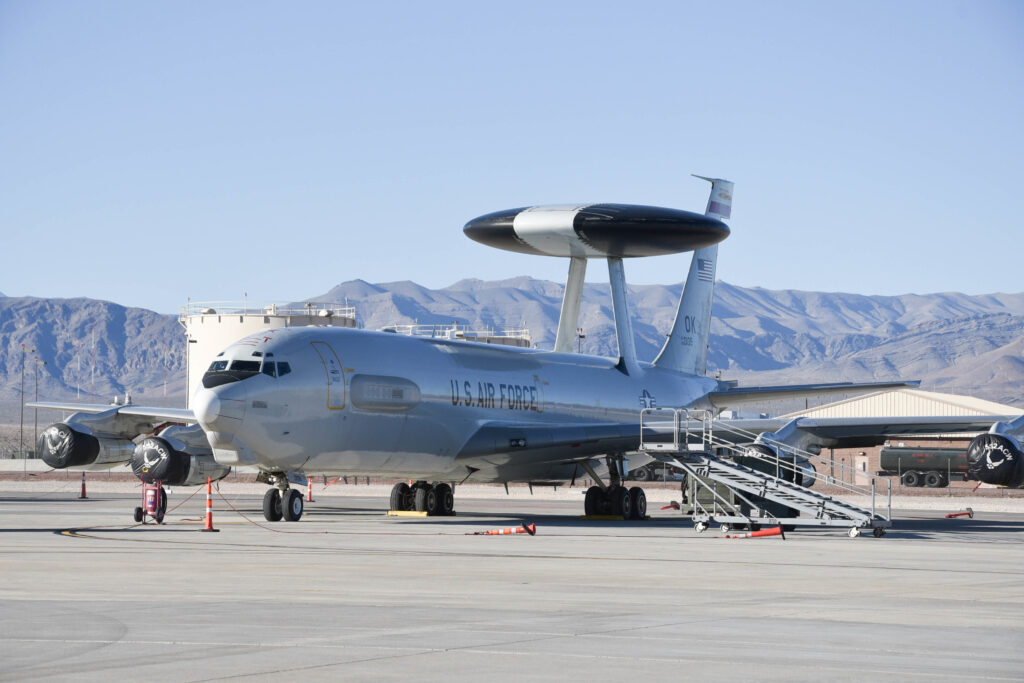
These aircraft are old. The first joined the fleet in 1978, and the fleet has shrunk steadily from 32 in 2015. Their maintenance record has been difficult: just over half were mission-capable at any given time in fiscal year 2024. The Air Force has been working toward replacing them with the newer E-7 Wedgetail, but that program is moving slowly, and each replacement aircraft is projected to cost around $700 million. There is no quick substitute on the shelf.
Defense analysts have been blunt about the consequences. Former F-16 pilot and Mitchell Institute research director Heather Penney described the loss as “incredibly problematic,” noting that the E-3 is central to everything from aircraft deconfliction to targeting support. Kelly Grieco of the Stimson Center put it more simply: there will be coverage gaps, and those gaps will have consequences in the ongoing air campaign.
The Uncomfortable Questions This Raises
Beyond the immediate military impact, this incident has reignited a long-running debate that the Pentagon has repeatedly chosen to sidestep the question of hardened aircraft shelters. The U.S. military dispersed its aircraft across taxiways and aprons at Prince Sultan specifically to reduce the risk of a single strike wiping out multiple assets. Despite that precaution, Iran still found and destroyed its target. At least five tanker aircraft were also damaged in earlier strikes on the same base.
Defense observers have pointed to the lessons of the Ukraine war, where Russia lost significant portions of its own aviation assets to Ukrainian strikes on exposed airfields. The Cold War doctrine of using hardened shelters for valuable aircraft exists for exactly this reason. Large aircraft like the E-3 or KC-135 tankers can’t fit inside a standard hardened shelter, but that only strengthens the argument for basing them further from the threat not parking them within missile range of an adversary that has demonstrated both the intelligence and the precision to hit them.
What Comes Next?
The U.S. military hasn’t sat still. Reports suggest additional airborne early warning assets are being repositioned toward the region to compensate. The conflict itself, now entering its second month, has seen Iranian missile and drone launch rates fall by over 90 percent from peak levels, according to CENTCOM. American and Israeli forces have reportedly struck more than two-thirds of Iran’s missile and drone production facilities.
But Iran is still launching. And with one of America’s most critical surveillance aircraft now a burned-out shell on a Saudi taxiway, the message from Tehran is harder to dismiss than any press release: the most powerful air force in the world has a vulnerability, and Iran just found it.
 Martin hope
  Shaifali