
Airline overbooking is a common yet often misunderstood practice in the aviation industry. At its core, overbooking means that airlines sell more tickets than there are seats available on a flight. While this may sound unusual or even unfair but it is actually a carefully calculated strategy designed to maximize efficiency and revenue in an industry with thin profit margins.
The only major and primary reason airlines overbook is passenger no-shows. Not every traveler who books a ticket ends up boarding the flight. People miss flights due to delays, cancellations, personal emergencies, or last-minute changes in plans. This is why the concept of overbooking is considered accurate.
It is actually a very well constructed plan in reference to the economical context. According to industry estimates, 5% to 15% of passengers on domestic flights do not show up, depending on the route and time of year. For airlines, empty seats represent lost revenue because once a flight departs, any unsold seat cannot be monetized.
To counter this, airlines use predictive algorithms and historical data to estimate how many passengers are likely to miss a particular flight.
There’s this proper working of the system, past booking patterns, seasonal trends and everything is analysed.
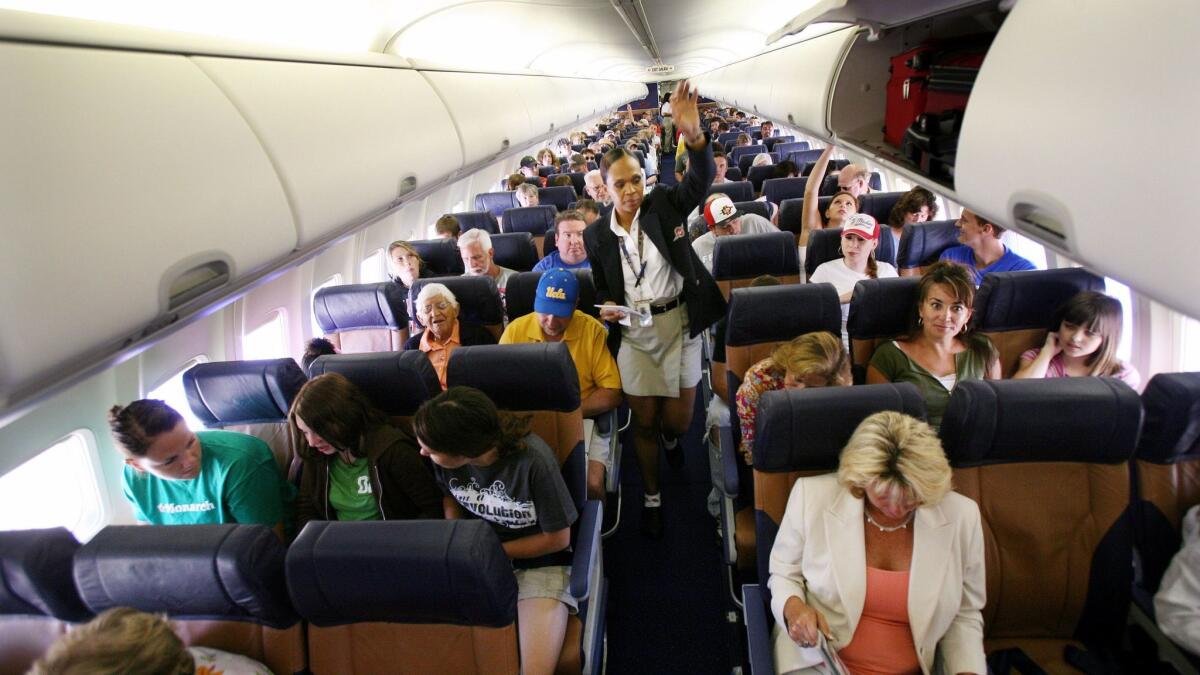
If a plane has 180 seats, an airline might sell 185–190 tickets, anticipating that at least 5–10 passengers will not show up.
It’s not always necessary that a person is missing or so, thus when everyone actually shows up. This situation is known as a “bumped passenger” scenario.
Airline involves a two way process in this
Voluntary Bumping
Airlines first ask for volunteers willing to give up their seats in exchange for compensation. This may include:
- Travel vouchers
- Cash compensation
- Free hotel stays
Involuntary Denied Boarding
If not enough volunteers come forward, airlines may deny boarding to some passengers. This is less common but more controversial.
In India, the Directorate General of Civil Aviation (DGCA) has set compensation rules:
- If the delay is less than 1 hour: No compensation
- Delay between 1–24 hours: Up to 200% of base fare + fuel charge (capped at ₹10,000)
- Delay over 24 hours: Up to 400% of base fare (capped at ₹20,000)
Thus this a proper well constructed process, proper rules have been made and applied to this. This usually happens in the flight where the chances of a person missing it are more.
For example, a business-heavy route (like Delhi–Mumbai) may have a higher no-show rate due to flexible travel plans, while leisure routes (like holiday destinations) tend to have fewer cancellations.
While all of this may sound chaotic and frustrating for passengers, overbooking has several advantages. By ensuring flights operate at near full capacity, airlines can distribute costs across more passengers, helping keep fares competitive and also Airlines operate on tight margins, typically 2–5% profit margins globally thus again this helps a lot.
Despite all the benefits, this involves risk overbooking has faced criticism, being denied boarding can make passengers disappointed, leading them not to choose the airline again. Also, selling more tickets than available seats raises questions about fairness.
However the number of passengers affected is really small, For example, in the United States, only about 0.02% to 0.05% of passengers are involuntarily denied boarding each year.
Modern airlines use AI and machine learning models to minimize overbooking errors.
This updated technology reduces the risk involved in this process and continuously update predictions based on real-time data, reducing the chances of too many passengers showing up.
Airline overbooking, when viewed through a data-driven lens, emerges less as a gamble and more as a finely tuned economic strategy. With no-show rates typically ranging between 5% and 15%, airlines rely on predictive analytics to ensure flights depart as close to full capacity as possible, protecting already thin 2–5% profit margins. At the same time, the actual risk to passengers remains statistically low
 Shaifali