
SYNOPSIS
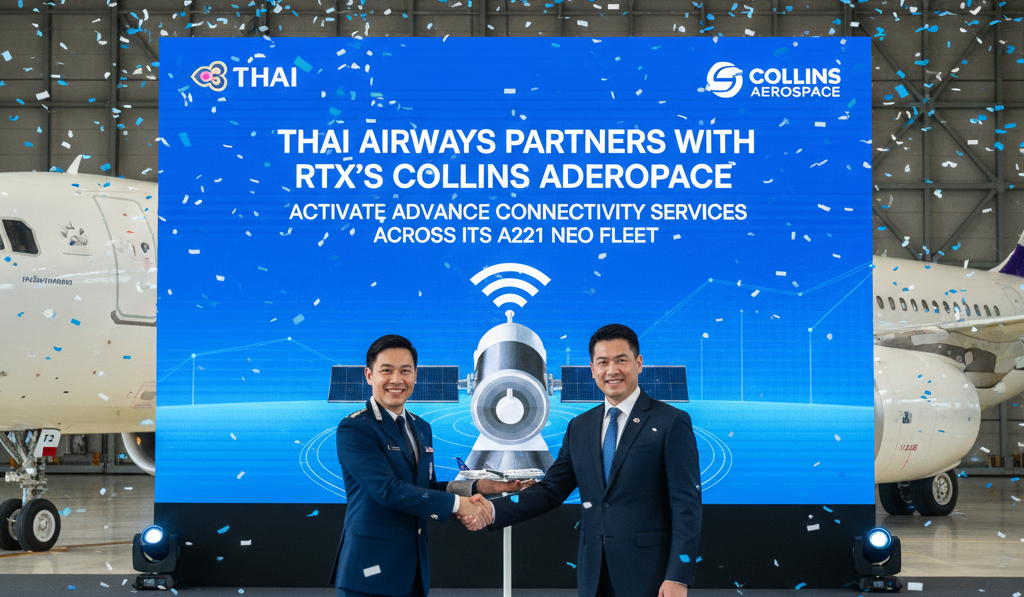
Thai Airways International has finalized an agreement with Collins Aerospace to integrate high-speed connectivity solutions across its upcoming fleet of Airbus A321neo aircraft. This technical partnership focuses on the installation of advanced cabin hardware and satellite-link services to provide seamless internet access for passengers. The initiative represents a major component of the carrier’s broader effort to modernize its narrow-body operations and improve the overall passenger experience on regional routes.
Thai Airways International Public Company Limited has confirmed a partnership with Collins Aerospace, an RTX business, to deploy an advanced connectivity suite for its new Airbus A321neo fleet. This deal focuses on the implementation of the Collins Global Connect system, which will provide high-bandwidth internet services to travellers and real-time data integration for flight crews. The rollout is scheduled to coincide with the delivery of the A321neo aircraft, which form the backbone of the airline’s regional capacity expansion. By selecting this specific technology, the Thai national carrier aims to offer a standardized and reliable high-speed Wi-Fi experience across its short and medium-haul network. This development follows a period of rigorous evaluation where the airline sought a solution capable of handling high volumes of data traffic while maintaining aerodynamic efficiency and low hardware weight. The agreement covers the supply of antennas, on-board servers, and wireless access points necessary to ensure total cabin coverage.
About Collins Aerospace Corporate Operations
Collins Aerospace operates as a primary business unit of RTX, formerly known as Raytheon Technologies. Based in Charlotte, North Carolina, the company is one of the world’s largest suppliers of aerospace and defence products. Its portfolio includes advanced avionics, flight control systems, interior cabin solutions, and communication technology. As a global entity, it maintains a significant presence in international markets, providing critical components for both commercial and military aviation sectors. The company’s role in this agreement involves leveraging its Global Connect platform, which integrates hardware and service management to provide a unified connectivity solution for airline operators. By functioning under the RTX corporate umbrella, Collins Aerospace utilizes extensive research and development resources to produce satellite communication systems that meet the stringent regulatory requirements of global aviation authorities.
The hardware selected for the A321neo fleet involves a complex array of satellite communication components designed for maximum throughput. Collins Aerospace will provide its latest generation of Ka-band connectivity hardware, which allows for higher speeds and more stable connections compared to older satellite frequencies. This system utilizes a multi-provider satellite network to ensure that aircraft remain connected even when transitioning between different regional satellite beams. The hardware is designed to be future-proof, allowing for software updates that can accommodate future increases in satellite capacity without requiring significant structural changes to the airframe.
The integration process will take place during the aircraft assembly phase at Airbus facilities, ensuring that the connectivity systems are fully certified and operational upon delivery to Thai Airways. This line-fit approach reduces the need for subsequent retrofitting, which can be costly and lead to aircraft downtime. The system includes a sophisticated cabin management interface that allows flight attendants to monitor connectivity status and assist passengers with technical issues. Furthermore, the hardware is optimized to minimize drag, a critical factor for the A321neo, which is marketed for its fuel efficiency and reduced carbon emissions.
FLEET STRATEGY AND RECOVERY FRAMEWORK
The decision to equip the A321neo with advanced connectivity is a direct response to the evolving demands of the post-pandemic travel market. Thai Airways is currently executing a multi-year recovery plan that involves streamlining its fleet and focusing on high-efficiency aircraft. The A321neo is central to this strategy, as it provides the range and capacity needed to serve key destinations in Southeast Asia, China, and India. By adding high-speed internet to these routes, the airline is targeting the business traveller segment, which increasingly views in-flight connectivity as a mandatory requirement rather than a luxury.
This partnership also reflects a shift in how the airline manages its cabin assets. Rather than relying on traditional in-flight entertainment screens alone, Thai Airways is moving toward a model that supports personal electronic devices. High-speed Wi-Fi allows passengers to stream content, access cloud-based work applications, and stay connected via social media, reducing the weight and maintenance costs associated with seat-back screens in narrow-body cabins. The integration of Collins Aerospace technology ensures that the airline can meet these expectations while maintaining the operational flexibility required for its regional network.
Beyond the passenger-facing benefits, the Collins Aerospace system provides significant advantages for flight operations and maintenance. The connectivity suite facilitates the real-time transmission of aircraft health data to ground-based engineering teams. This capability allows for proactive maintenance scheduling, as technical issues can be identified and diagnosed while the aircraft is still in flight. By reducing the time required for troubleshooting on the ground, Thai Airways can improve its aircraft utilization rates and minimize the risk of technical delays.
Flight crews also benefit from the improved data link. Modern flight decks rely on updated weather information, revised flight plans, and real-time communication with air traffic control and company dispatchers. The high-speed connection provided by the Global Connect system ensures that pilots have access to the most current data available, enhancing situational awareness and flight safety. This integration of cabin and cockpit data services demonstrates the comprehensive nature of the agreement and its impact on the airline’s technical efficiency.
COMPETITIVE POSITIONING IN SOUTHEAST ASIA
The aviation sector in Southeast Asia is highly competitive, with numerous low-cost carriers and full-service airlines vying for dominance. Thai Airways faces significant pressure from regional rivals that have already invested heavily in cabin technology. By partnering with a global leader like Collins Aerospace, the airline is signalling its intent to regain market share and re-establish itself as a premium carrier. The ability to offer reliable, high-speed internet on narrow-body aircraft is a significant differentiator in a market where many competitors still offer limited or no connectivity on shorter routes.
This move is also part of a larger effort to modernize the brand image of Thai Airways. The airline has faced several years of financial challenges and restructuring, and the introduction of the A321neo fleet with advanced technology is a key part of its revitalization. The partnership provides a clear signal to investors and passengers that the carrier is committed to maintaining high service standards. The choice of a proven partner like Collins Aerospace also mitigates the risks associated with technical deployment, ensuring that the airline can deliver on its promises to the traveling public.
ECONOMIC OUTLOOK AND PROJECTED GROWTH
The financial implications of this partnership are significant for both Thai Airways and Collins Aerospace. For the airline, the investment in connectivity is expected to drive higher ancillary revenue through the sale of Wi-Fi packages and increased loyalty from high-value corporate travellers. For Collins Aerospace, the deal reinforces its position as a primary supplier for major international carriers and highlights the growing demand for connectivity in the narrow-body segment. The long-term agreement includes ongoing support and maintenance, ensuring a steady stream of cooperation between the two entities.
As Thai Airways continues to receive its A321neo deliveries over the coming years, the prevalence of this technology will increase across its entire regional network. This will create a more uniform service offering, making it easier for the airline to market its products to international travellers who expect a consistent experience regardless of the aircraft type. The success of this implementation will likely influence the airline’s future decisions regarding the remainder of its wide-body fleet and any subsequent aircraft orders. The focus remains on leveraging technology to drive efficiency and enhance the value proposition for the modern air traveller.
Dossier
- Thai Airways has partnered with Collins Aerospace to implement the Global Connect connectivity suite on its upcoming fleet of Airbus A321neo aircraft.
- The hardware utilizes Ka-band satellite technology to provide higher throughput and stable high-speed Wi-Fi for both passengers and flight operations.
- Systems are being integrated as a line-fit solution during the aircraft assembly phase at Airbus facilities to ensure full certification and minimize operational downtime.
- The connectivity suite supports real-time transmission of aircraft health data to ground-based engineering teams for proactive maintenance and improved utilization rates.
- Thai Airways is utilizing high-speed internet to transition toward a personal electronic device (PED) model for in-flight entertainment on regional routes, reducing airframe weight.
 Vibhuuti Goyal