

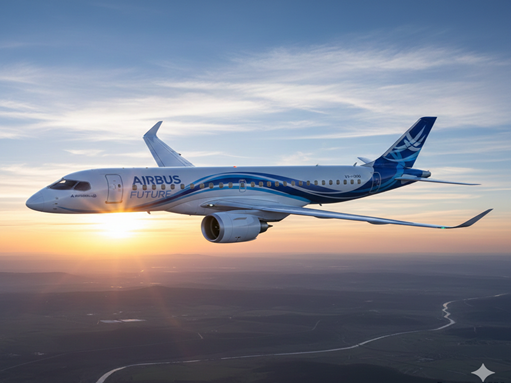
In the high-stakes laboratories of Toulouse and the industrial hubs of Mirabel, a tectonic shift is currently unfolding within the narrow body aviation sector. Airbus, the European aerospace titan, is no longer merely contemplating the expansion of its smallest jet family; it is actively laying the groundwork for a larger iteration known as the A220-500. This strategic maneuver represents more than a simple lengthening of a fuselage. It is a calculated challenge to the established order of short-to-medium haul travel, aimed squarely at the lucrative 180-seat segment that has long been the primary hunting ground for the venerable A320neo and the Boeing 737 MAX 8. By exploring the viability of this stretched variant, Airbus is signaling its readiness to transition from a period of product integration to one of aggressive market disruption.
The core economic driver behind this development is the pursuit of optimized seat-mile efficiency. The current A220-300, which typically accommodates between 120 and 150 passengers, has already demonstrated superior fuel economics and a reduced environmental footprint compared to older aircraft in its class. However, major global carriers, including Air France-KLM and various North American operators, have become increasingly vocal in their desire for a variant that bridges the gap between the regional jet and the mainline narrow body. The A220-500 is designed to resolve this tension by offering a capacity of approximately 170 to 180 seats in a high-density configuration. This puts it in direct competition with Airbus’s own internal product line, creating a fascinating social and corporate conflict within the organization. The challenge lies in expanding the A220 family without prematurely cannibalizing the backlog of the A320neo, which remains the company’s most significant cash cow.
A deep analysis of the statistical context reveals why the A220-500 is such a compelling prospect for the next decade of aviation. While the A320neo is a re-engined version of a design dating back to the 1980s, the A220 is a clean-sheet architecture originally conceived by Bombardier as the C Series. This modern pedigree allows for a significantly higher percentage of advanced composite materials, resulting in a lighter airframe. Preliminary data suggests that an A220-500 could offer a double-digit reduction in fuel burn per seat compared to the existing A320neo. Furthermore, the aircraft’s wider seats and larger windows provide a superior passenger experience, a factor that airlines are increasingly using as a differentiator in a crowded market. The economic reality is that as carbon taxes and fuel prices fluctuate, the margin provided by a 20 percent reduction in carbon emissions and 25 percent lower fuel consumption per seat becomes a critical survival metric for thin-margin airlines.
The global implications of this stretch variant are multifaceted, involving a complex web of stakeholders ranging from engine manufacturers to leasing firms. At the center of the operational debate is the Pratt & Whitney Geared Turbofan engine. While this propulsion system is the key to the aircraft’s efficiency, it has also been the source of significant reliability hurdles and maintenance delays over the past three years. Airbus executives have made it clear that any formal launch of the A220-500 is contingent upon the engine manufacturer demonstrating a stable and reliable performance profile. From the perspective of Boeing, the arrival of the A220-500 would represent a formidable new rival. The 737 MAX 8 has traditionally dominated the 180-seat market, but a lighter, more modern A220 variant could potentially peel away customers who value fleet commonality and lower operating weights over the MAX’s slightly higher range.
Looking toward future projections, the timeline for the A220-500 remains a subject of intense speculation and strategic posturing. Airbus leadership has consistently stated that the immediate priority is reaching the production target of 14 aircraft per month by the middle of the decade and achieving profitability for the currently loss-making program. Analysts suggest that a formal launch could occur as early as 2025 or 2026, with entry into service potentially slated for the late 2020s. This timing would coincide with a period where many airlines will be looking to replace their aging fleets of early-generation A320s and 737-800s. The expert outlook suggests that the A220-500 will not just be an addition to the fleet but will serve as the successor to the lower end of the A320 family, eventually becoming the backbone of the world’s regional and transcontinental routes.
The executive conclusion for the global aviation community is that the A220-500 is an inevitable evolution of the narrow body landscape. While Airbus must navigate the delicate balance of internal product overlap and supply chain fragility, the market demand for a 180-seat aircraft with modern aerodynamics is too significant to ignore. The shift toward this larger variant reflects a broader industry trend where efficiency, environmental compliance, and passenger comfort are the three pillars of procurement. As the aerospace sector continues its recovery and moves toward a more sustainable future, the A220-500 stands poised to redefine the economics of flight, ensuring that the legacy of the clean-sheet design finally reaches its full industrial and commercial potential. The question for the industry is no longer whether this aircraft will exist, but rather how quickly the competitive landscape will adapt to its arrival.
 Vibhuuti Goyal